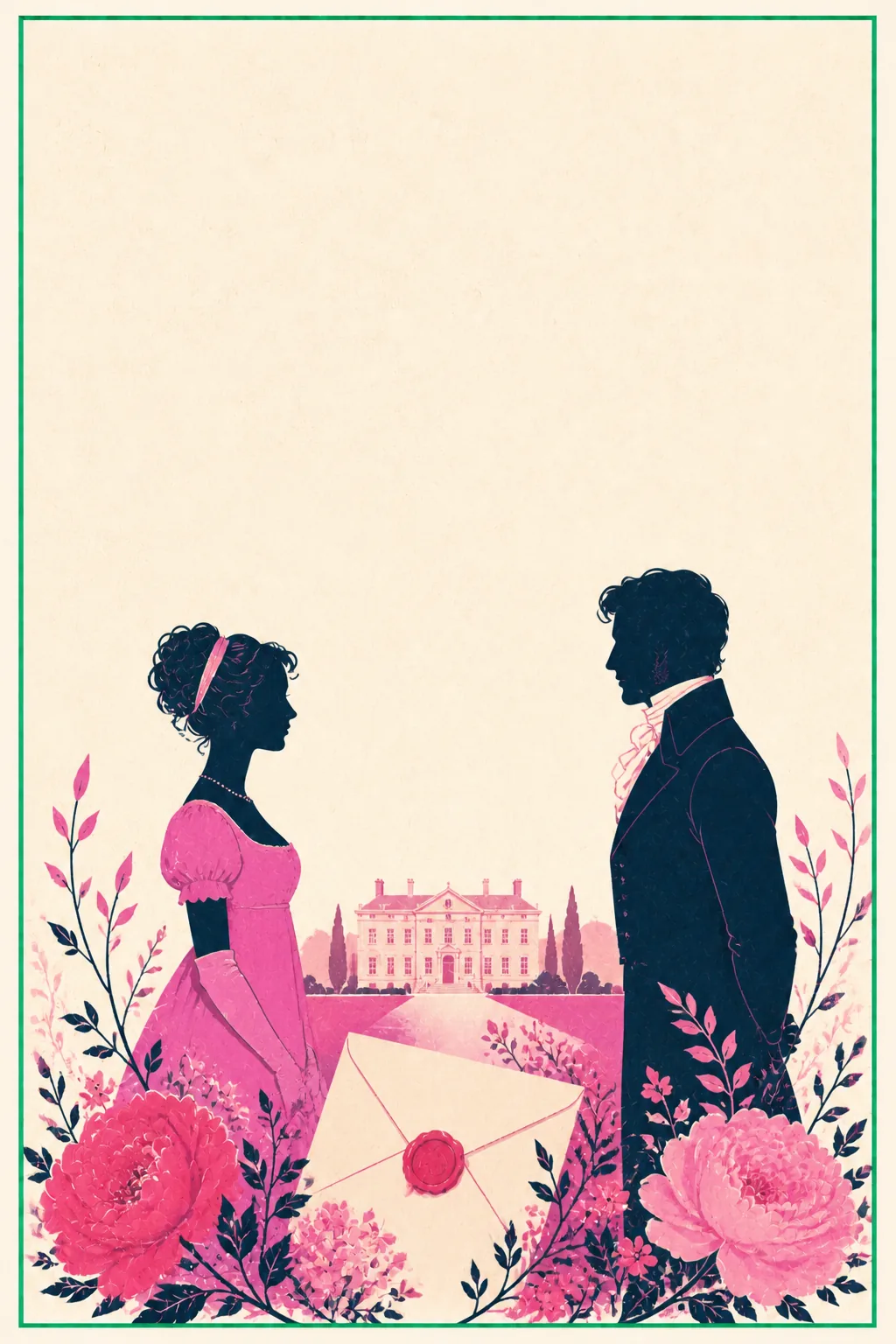
Pride and Prejudice
por Jane Austen
Elizabeth Bennet y el orgulloso señor Darcy se abren paso hacia el amor, en la querida comedia de costumbres de Austen. Esta edición bilingüe de "Pride and Prejudice" de Jane Austen usa nuestro formato Side-by-Side para que la literatura clásica sea más accesible para estudiantes de idiomas. Lees en el idioma original y comparas la traducción al instante sin perder el ritmo de lectura.
Pride and Prejudice · English → German · Side-by-Side
Pago seguro con Stripe. Descarga inmediata tras la compra.
Lee una muestra bilingüe gratis
El comienzo de «Pride and Prejudice» con la traducción alineada párrafo a párrafo — así se lee la edición completa.
_I suppose, however, that the majority of at least competent votes would, all things considered, be divided between_ Emma _and the present book; and perhaps the vulgar verdict (if indeed a fondness for Miss Austen be not of itself a patent of exemption from any possible charge of vulgarity) would go for_ Emma. _It is the larger, the more varied, the more popular; the author had by the time of its composition seen rather more of the world, and had improved her general, though not her most peculiar and characteristic dialogue; such figures as Miss Bates, as the Eltons, cannot but unite the suffrages of everybody. On the other hand, I, for my part, declare for_ Pride and Prejudice _unhesitatingly. It seems to me the most perfect, the most characteristic, the most eminently quintessential of its author’s works; and for this contention in such narrow space as is permitted to me, I propose here to show cause._
_Supongo, sin embargo, que la mayoría de los votos al menos competentes se dividiría, considerándolo todo, entre_ Emma _y el presente libro; y quizás el veredicto vulgar (si es que el afecto por la señorita Austen no es de por sí una patente de exención de cualquier posible cargo de vulgaridad) se inclinaría por_ Emma. _Es la más extensa, la más variada, la más popular; la autora, para cuando la compuso, había visto bastante más del mundo, y había mejorado su diálogo general, aunque no el más peculiar y característico; figuras como la señorita Bates, como los Elton, no pueden sino unir los sufragios de todos. Por otro lado, yo, por mi parte, me declaro sin vacilar por_ Orgullo y prejuicio. _Me parece la más perfecta, la más característica, la más eminentemente quintaesencial de las obras de su autora; y para sostener esta afirmación, en el espacio tan reducido que se me permite, me propongo aquí exponer mis razones._
_I think, however, though the thought will doubtless seem heretical to more than one school of critics, that construction is not the highest merit, the choicest gift, of the novelist. It sets off his other gifts and graces most advantageously to the critical eye; and the want of it will sometimes mar those graces--appreciably, though not quite consciously--to eyes by no means ultra-critical. But a very badly-built novel which excelled in pathetic or humorous character, or which displayed consummate command of dialogue--perhaps the rarest of all faculties--would be an infinitely better thing than a faultless plot acted and told by puppets with pebbles in their mouths. And despite the ability which Miss Austen has shown in working out the story, I for one should put_ Pride and Prejudice _far lower if it did not contain what seem to me the very masterpieces of Miss Austen’s humour and of her faculty of character-creation--masterpieces who may indeed admit John Thorpe, the Eltons, Mrs. Norris, and one or two others to their company, but who, in one instance certainly, and perhaps in others, are still superior to them._
_Sin embargo, pienso, aunque el pensamiento sin duda parecerá herético a más de una escuela de críticos, que la construcción no es el mérito más alto, el don más exquisito, del novelista. Realza sus otras dotes y gracias de manera muy ventajosa a los ojos del crítico; y su ausencia a veces echará a perder esas gracias --de modo apreciable, aunque no del todo consciente-- a ojos que de ningún modo son ultracríticos. Pero una novela muy mal construida que sobresaliera en el carácter patético o humorístico, o que mostrara un dominio consumado del diálogo --acaso la más rara de todas las facultades-- sería algo infinitamente mejor que un argumento intachable representado y narrado por marionetas con piedrecillas en la boca. Y a pesar de la habilidad que la señorita Austen ha mostrado al elaborar la historia, yo, por mi parte, situaría_ Orgullo y prejuicio _mucho más abajo si no contuviera lo que me parecen las verdaderas obras maestras del humor de la señorita Austen y de su facultad para crear personajes --obras maestras que, en efecto, pueden admitir en su compañía a John Thorpe, a los Elton, a la señora Norris y a uno o dos más, pero que, en un caso ciertamente, y quizá en otros, aún les son superiores._
_The Bingleys and the Gardiners and the Lucases, Miss Darcy and Miss de Bourgh, Jane, Wickham, and the rest, must pass without special comment, further than the remark that Charlotte Lucas (her egregious papa, though delightful, is just a little on the thither side of the line between comedy and farce) is a wonderfully clever study in drab of one kind, and that Wickham (though something of Miss Austen’s hesitation of touch in dealing with young men appears) is a not much less notable sketch in drab of another. Only genius could have made Charlotte what she is, yet not disagreeable; Wickham what he is, without investing him either with a cheap Don Juanish attractiveness or a disgusting rascality. But the hero and the heroine are not tints to be dismissed._
_Los Bingley, los Gardiner y los Lucas, la señorita Darcy y la señorita de Bourgh, Jane, Wickham y los demás deben pasar sin comentario especial, salvo la observación de que Charlotte Lucas (cuyo insigne padre, aunque delicioso, se sitúa apenas un poco del otro lado de la línea que separa la comedia de la farsa) es un estudio maravillosamente hábil en gris apagado de un tipo, y que Wickham (aunque asoma algo de la vacilación de toque de la señorita Austen al tratar con hombres jóvenes) es un boceto no mucho menos notable en gris apagado de otro tipo. Solo el genio podría haber hecho a Charlotte tal como es, y sin embargo no desagradable; a Wickham tal como es, sin dotarlo ni de un atractivo donjuanesco barato ni de una canallería repugnante. Pero el héroe y la heroína no son matices que se puedan despachar sin más._
_And, after all, what is the good of seeking for the reason of charm?--it is there. There were better sense in the sad mechanic exercise of determining the reason of its absence where it is not. In the novels of the last hundred years there are vast numbers of young ladies with whom it might be a pleasure to fall in love; there are at least five with whom, as it seems to me, no man of taste and spirit can help doing so. Their names are, in chronological order, Elizabeth Bennet, Diana Vernon, Argemone Lavington, Beatrix Esmond, and Barbara Grant. I should have been most in love with Beatrix and Argemone; I should, I think, for mere occasional companionship, have preferred Diana and Barbara. But to live with and to marry, I do not know that any one of the four can come into competition with Elizabeth._
_Y, después de todo, ¿de qué sirve buscar la razón del encanto? Ahí está. Habría más sensatez en el triste ejercicio mecánico de determinar la razón de su ausencia donde no lo hay. En las novelas del último siglo hay un gran número de señoritas de las que podría ser un placer enamorarse; hay al menos cinco de las que, según me parece, ningún hombre de buen gusto y espíritu puede dejar de hacerlo. Sus nombres son, por orden cronológico, Elizabeth Bennet, Diana Vernon, Argemone Lavington, Beatrix Esmond y Barbara Grant. Yo habría estado más enamorado de Beatrix y Argemone; creo que, para una mera compañía ocasional, habría preferido a Diana y a Barbara. Pero para vivir con ella y casarme, no sé si alguna de las cuatro pueda competir con Elizabeth._
“Lady Catherine,” said she, “you have given me a treasure” 200
“Lady Catherine —dijo ella—, me ha dado usted un tesoro” 200
It is a truth universally acknowledged, that a single man in possession of a good fortune must be in want of a wife.
Es una verdad universalmente reconocida que un hombre soltero, poseedor de una buena fortuna, necesita una esposa.
However little known the feelings or views of such a man may be on his first entering a neighbourhood, this truth is so well fixed in the minds of the surrounding families, that he is considered as the rightful property of some one or other of their daughters.
Por poco que se conozcan los sentimientos u opiniones de un hombre así al establecerse por primera vez en un vecindario, esta verdad está tan arraigada en la mente de las familias circundantes, que le consideran como legítima propiedad de alguna de sus hijas.
“My dear Mr. Bennet,” said his lady to him one day, “have you heard that Netherfield Park is let at last?”
“Mi querido señor Bennet,” le dijo un día su esposa, “¿te has enterado de que por fin han alquilado Netherfield Park?”
“But it is,” returned she; “for Mrs. Long has just been here, and she told me all about it.”
“Pues sí,” replicó ella; “porque la señora Long acaba de estar aquí y me lo ha contado todo.”
“Do not you want to know who has taken it?” cried his wife, impatiently.
“¿No quieres saber quién lo ha alquilado?” exclamó su esposa, impaciente.
“_You_ want to tell me, and I have no objection to hearing it.”
“_Tú_ quieres decírmelo, y no tengo inconveniente en oírlo.”
“Why, my dear, you must know, Mrs. Long says that Netherfield is taken by a young man of large fortune from the north of England; that he came down on Monday in a chaise and four to see the place, and was so much delighted with it that he agreed with Mr. Morris immediately; that he is to take possession before Michaelmas, and some of his servants are to be in the house by the end of next week.”
“Pues, querido, debes saber que la señora Long dice que Netherfield lo ha alquilado un joven de gran fortuna del norte de Inglaterra; que llegó el lunes en un coche de cuatro caballos para ver la finca, y quedó tan encantado con ella que se puso de acuerdo con el señor Morris inmediatamente; que tomará posesión antes de San Miguel, y que algunos de sus criados estarán en la casa para fines de la semana próxima.”
La edición completa contiene el texto íntegro en ambos diseños (dos columnas y por párrafos) en EPUB y PDF.
Qué incluye esta edición
Texto íntegro, traducción alineada frase a frase, archivos EPUB y PDF, y diseños en paralelo y por párrafos. Entrega digital; no se envía ningún artículo físico.
Precios sencillos según el tamaño en USD: $1.99, $3.99, $5.99 o $9.99. Ambos diseños cuestan lo mismo; la disponibilidad depende del par de idiomas y del formato.
¿Es adecuado para ti?
Intermedio · unas 320 páginas. Lee la muestra alineada gratuita: si entiendes la mayor parte del original antes de mirar la traducción, el nivel es adecuado.
Intermedio · B1–B2 →Combinaciones de idiomas
Sigue leyendo

The Adventures of Tom Sawyer
Mark Twain
Sigue al travieso Tom Sawyer en sus aventuras de infancia junto al río Misisipi en este clásico estadounidense.
$3.99 USD

The Call of the Wild
Jack London
La apasionante historia de Buck, un perro doméstico llevado a la dura vida de perro de trineo en Alaska.
$1.99 USD
Ethan Frome
Edith Wharton
Una historia trágica de amor prohibido ambientada en el invierno rural de Nueva Inglaterra.
$3.99 USD